

New Book Talk: Grains of Conflict: The Struggle for Food During China's Total War, 1937 – 1945 by Dr. Jennifer Yip (NUS)
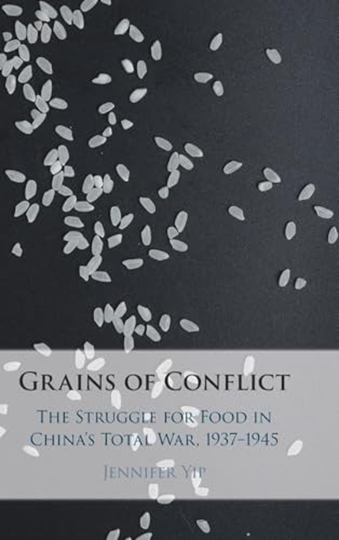
New Book Talk: Grains of Conflict: The Struggle for Food During China's Total War, 1937 – 1945 by Dr. Jennifer Yip (NUS)
How did the Nationalist government feed their armies during its war against Japan, and survive eight years of war against all odds? Jennifer Yip demonstrates how the Chinese government relied on mass civilian mobilization to carry out all stages of military provisioning, from procurement to transportation and storage. The circulation of grain throughout wartime China depended on the intensive use of civilian labor and assets. By tracing the complex movement of grain across large distances and across free/occupied boundaries, Yip shows how China sustained total war by ruthlessly extracting civilian resources, with adverse consequences for much of the population. Such reliance on a distinctly preindustrial resource base shaped China's conception of its own total war effort and distinguished China's experience as unique among World War Two combatants. Yip revisits conceptual understandings of total war by challenging, firstly, the predominant image of World War II as one of technological prowess, and secondly, the tendency to conflate total war with industrialized warfare. China's story encapsulates enduring themes in wartime politics and strategy: the weaponization of food; hunger in conflict; and the challenge of retaining state legitimacy while demanding citizen sacrifice.