
Ahmet T. Karamustafa
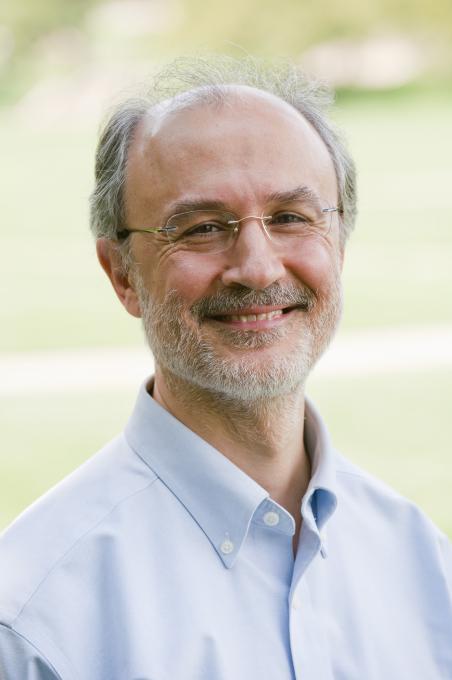
Professor and Department Chair, History
Professor of History, Roshan Institute for Persian Studies, School of Languages, Literatures, and Cultures
Senior Advisor to PersDig@UMD , Roshan Institute for Persian Studies
akaramus@umd.edu
3107A Taliaferro Hall
Get Directions
Research Expertise
Early Modern History
Medieval History
Middle East
Ahmet T. Karamustafa is Professor of History at the University of Maryland, College Park. His expertise is in social and intellectual history of medieval and early modern Islam in the Middle East and Southwest Asia as well as in theory and method in the study of religion. He is the author of God’s Unruly Friends (University of Utah Press, 1994), a book on ascetic movements in medieval Islam; Vahidi’s Menakıb-ı Hvoca-i Cihan ve Netice-i Can (The Department of Near Eastern Languages and Civilizations, Harvard University, 1993), a study of a sixteenth-century mystical text in Ottoman Turkish; and Sufism: The Formative Period (published simultaneously by Edinburgh University Press & University of California Press, 2007), a comprehensive historical overview of early Islamic mysticism. He also served as an editor for, and wrote several articles in, Cartography in the Traditional Islamic and South Asian Societies (University of Chicago Press, 1992), and co-edited (with Fatemeh Keshavarz), Mystical Landscapes in Medieval Persian Literature (Edinburgh University Press, 2025). Currently, he is at work on a book project tentatively titled The Age of Hızır: Islam in the Mirror of Early Turkish Literature. Karamustafa has held several administrative positions, including a five-year term as director of the Religious Studies Program at Washington University in St. Louis. He was the co-chair of the Study of Islam Section at the American Academy of Religion between 2008 and 2011.
Recent Articles and Essays (many available on Karamustafa’s academia.edu site)
“Sharī‘a/Revealed Religion According to ‘Azīz-i Nasafī,” in Mystical Landscapes in Medieval Persian Literature, 197-213. Edited by Ahmet T. Karamustafa and Fatemeh Keshavarz. Edinburgh: Edinburgh University Press, 2025.
“Situating Sufism in Islamizing Anatolia (14th and 15th Centuries),” in Sufis and their Opponents in the Persianate World, 141-165. Edited by Reza Tabandeh and Leonard Lewisohn. Irvine: Jordan Center for Persian Studies at University of California Irvine, 2020.
“Books on Sufism, Lives of Saints, Ethics and Sermons,” (co-authored with Cemal Kafadar) in Treasures of Knowledge: An Inventory of the Ottoman Palace Library, 1502/3-1503/4, vol. 1, Essays, 439-507. Edited by Cornell Fleischer, Cemal Kafadar and Gülru Necipoğlu. Leiden: Brill, 2019 (Supplements to Muqarnas Series 14).
“Shi‘is, Sufis and Popular Saints,” Chapter 7 in Part II The ‘High Caliphate’ (ca. 661-950), The Wiley-Blackwell History of Islam, 159-176. Edited by Armando Salvatore. Hoboken, NJ: John Wiley & Sons, 2018.
“Islamic ‘Dīn’ as an Alternative to Western Models of ‘Religion’,” in King, Richard, ed. Religion, Theory, Critique : Classic and Contemporary Approaches and Methodologies, 163-171. Edited by Richard King. New York: Columbia University Press, 2017.
“Reading Medieval Persian Hagiography through the Prism of Adab: The Case of Asrār al-tawhīd,” in Ethics and Spirituality in Islam: Sufi Adab, pp. 131-141. Edited by Francesco Chiabotti, Eve Feuillebois–Pierunek, Catherine Mayeur–Jaouen, and Luca Patrizi. Leiden: Brill, 2017.
“In his Own Voice: What Hatayi Tells us about Şah İsmail’s Religious Views,” in Ésotérisme shi’ite, ses racines et ses prolongements, 601-611. Edited by Mohammad Ali Amir-Moezzi, Maria De Cillis, Daniel De Smet, Orkhan Mir-Kasimov, Bibliothèque de l'École des Hautes Études and The Institute of Ismaili Studies, Paris and London, 2016.