
Patrick Chung
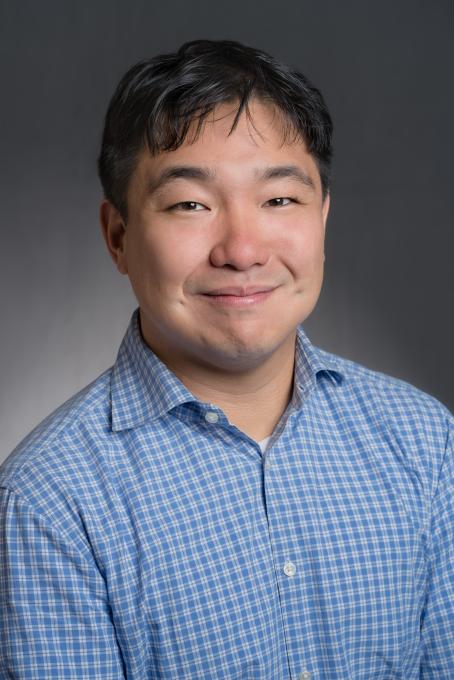
Assistant Professor, History
pchung10@umd.edu
2101G Francis Scott Key Hall
Get Directions
Research Expertise
Asia
Economic & Labor History
Empires
Global Interaction and Exchange
Military History
Modern History
Technology, Science, Environment & Medicine
United States
Schedule an Office Hours Appointment HERE.
I am a historian of the United States and the US military. My research and teaching interests include US and global military history, the Cold War Pacific and South Korea, military-industrial relations, and global capitalism.
My scholarship explores the pervasive impact of the US military on modern economic life. My first book, Standardizing Empire: The US Military, Korea, and the Origins of Military-Industrial Capitalism, traces how the US military remade the global economy during the Cold War. The period saw the first permanent overseas deployment of US troops and the creation of a global network of US military bases. These developments transformed the US military into the world's largest consumer of goods and services. US military contracts came to influence the production of countless everyday items like cast iron pipes and clothing as well as a range of essential services like transportation and construction. Focusing on the Korean War and the subsequent militarization of South Korea, I use the term "military-industrial capitalism" to describe the new economic system centered on US military consumption. To illustrate the pervasive impact of military-industrial capitalism, Standardizing Empire traces the histories of three of the leading South Korean multinational corporations today: shipping company Hanjin, steelmaker POSCO, and car manufacturer Hyundai. These case studies explain not only how today's US-led capitalist world economy originated but also how the emergence of military-industrial capitalism facilitated both South Korea's "economic miracle" and the decline of US industrial might.
I am currently working on two new research projects. The first is an outgrowth of my book's exploration of POSCO. The Korean steelmaker bought a controlling stake in a steel mill in Pittsburg, CA owned by US Steel during the 1980s. Drawing on oral histories of Pittsburgh steelworkers, I will examine the impact of foreign ownership on the mill's operations and the surrounding community. The second project focuses on the development, production, and distribution of semiconductors. Powering the electronic devices that make everyday life possible, semiconductor production has become a key factor in global politics, security, economics, and trade. Focusing on the development of the South Korean semiconductor industry, which is currently second only to Taiwan in global production, my project asks how the US military's sustained presence in the Pacific during the Cold War affected it.
In addition to my book, I have published articles in Diplomatic History and Radical History Review as well as book chapters in two edited volumes, The Military and the Market and Korea and the World: New Frontier in Korean Studies.