The Department of History at the University of Maryland is located within the Washington-Baltimore corridor, one of the nation's most dynamic regions for historical research.
Continue on this page for more information and links to our many projects, centers, partnerships, research events, and news!
Christopher Bonner's book "Remaking the Republic: Black Politics and the Creation of American Citizenship" chronicles the various ways African Americans from a wide range of social positions throughout the North attempted to give meaning to American citizenship over the course of the nineteenth century.
The Hungry Steppe: Famine, Violence, and the Making of Kazakhstan
Learn about Sarah Cameron’s book "The Hungry Steppe: Famine, Violence, and the Making of Kazakhstan."
Sarah Cameron’s book, "The Hungry Steppe: Famine, Violence, and the Making of Kazakhstan" uses new Russian and Kazakh language sources to tell the story of one of the most abominable crimes of the Stalin years—and one that’s gone largely untold. Between 1930 and 1933, more than 1.5 million people—a quarter of Kazakhstan's population—perished as a result of a state-driven campaign that forced a rural, nomadic population into collective farms and factories and confiscated their livestock. Although elements of nomadic culture continued to influence Kazakh life in the post-famine years, the effort effectively eradicated nomadism as an economic practice.
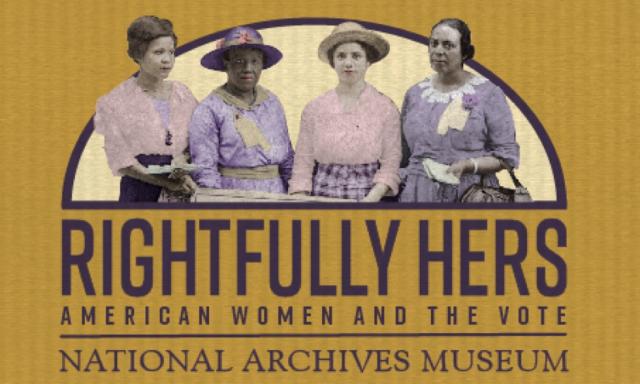
Rightfully Hers: American Women and the Vote exhibit
Robyn Muncy guest curates exhibit at the National Archives to commemorate the centenary of the ratification of the Nineteenth Amendment.
History
Dates:
-
Robyn Muncy, professor of history, guest curated an exhibit at the National Archives marking the 100th anniversary of women in the U.S. attaining the right to vote.
Robyn Muncy, professor of history, is a guest curator of "Rightfully Hers: American Women and the Vote," an exhibit to commemorate the centenary of the ratification of the Nineteenth Amendment at the National Archives in Washington, DC. The exhibit opened in March and will run through September 2020.
The exhibition is part of a nationwide initiative exploring the generations-long fight for universal woman suffrage. Despite decades of marches, petitions, and public debate to enshrine a woman’s right to vote in the Constitution, the 19th Amendment – while an enormous milestone – did not grant voting rights for all. The challenges of its passage reverberate to the ongoing fight for gender equity today.
What is now considered a key component of citizenship - the right to vote - is often taken for granted, and is not afforded to all through the Constitution. Through this initiative, the National Archives will not only highlight the hard-won victories that stemmed from the Women’s Suffrage movement, but also remind modern-day citizens of their responsibilities associated with the right to vote.
Suspect Freedoms: The Racial and Sexual Politics of Cubanidad in New York, 1823-1957
Study explores Cuban racial and sexual politics in New York during the nineteenth and twentieth centuries. Examines Afro-Cuban activism, politics, intellectual and cultural production.
American Studies, History, The Harriet Tubman Department of Women, Gender, and Sexuality Studies
Dates: Publisher:
New York University Press, 2017.
"Suspect Freedoms" chronicles more than a hundred years of Cuban diasporic history in New York. One of the few studies to examine the early history of Afro-Cuban migration and politics, it employs a rich cache of primary sources, archival documents, literary texts, club records, newspapers, photographs, and oral histories to produce what Michel Rolph Trouillot calls an "unthinkable history."